What to Expect During Your First Skilled Nursing Visit at Home
Recovering from surgery or living with a chronic condition as you age is associated with a long list of unknowns. Is my home actually safe to move around in? Will I manage medications correctly? Who do I call if something feels wrong at 2 a.m.?
These questions or worries start getting real answers with the first skilled nursing visit at home. Instead of a rushed hospital checklist handed to you right before discharge, a registered nurse will spend dedicated time with you to explain your care plan, answer questions, and support a smooth transition to at-home recovery.
So, knowing what to expect can make the process easier for you and your family. Let’s uncover what really happens during your first visit to help you understand how skilled nursing services work from the outset.
When Skilled Nursing Home Care Services Can Make the Biggest Difference
Each patient’s care needs are different, and choosing quality nursing support at home can help in various situations. A clear knowledge of where it fits can help you decide if it’s the right choice for your loved ones:
- Recovering from surgery or illness
- Managing a chronic condition daily
- Needing regular medication oversight
- Supporting a loved one’s memory changes
Needs are different for every family. However, the goal stays the same. Safe, professional care at home instead of a hospital bed or facility stay. This type of care is now delivered locally, right in the neighborhoods already home instead of requiring a trip to a clinic or a family member’s home. For instance, a family seeking home healthcare services in Highland Beach is generally looking for a nurse who can help with post-surgical recovery, medical oversight, or memory-related changes associated with aging at home.
Before the Nurse Arrives: A Few Simple Ways to Prepare
A bit of preparation is important to make the first visit more productive. Gathering a couple of items can help the nurse understand your health history and current needs immediately. So stay prepared with:
- Current medication list and bottles
- Recent hospital discharge paperwork
- List of ongoing symptoms or concerns
- Contact information for your physician
Having these prepared helps the nurse dedicate more time to delivering home care services and less time to gathering medical background information.
How Your First Visit Actually Unfolds
Home nursing visits are primarily tailored to the patient. Each stage of the visit is carefully structured to provide the nurse with a better understanding of your loved one’s current condition and care needs.
The Initial Health Assessment
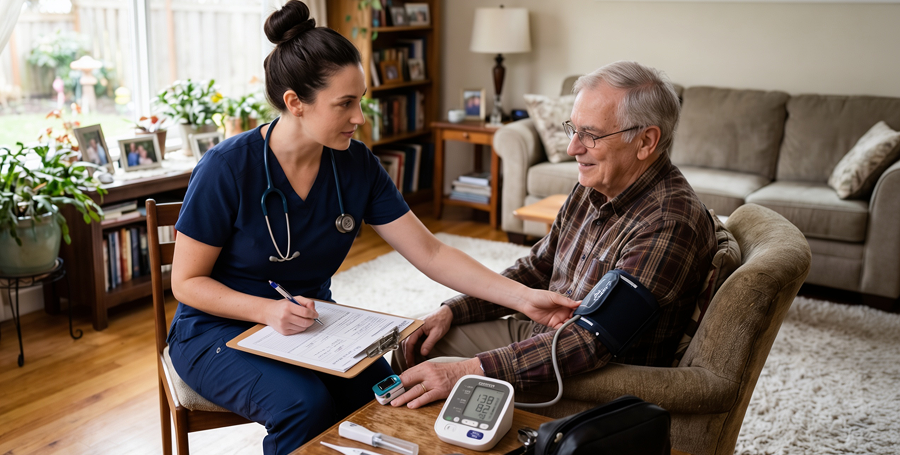
At first, the nurse reviews the medical history, recent hospital stays, and any physician recommendations on file. This conversation can help identify immediate concerns and establish a strong baseline for future visits.
Assessments include checks for:
- Blood pressure and heart rate
- Temperature and respiratory rate
- Pain levels and mobility
- Skin condition and overall appearance
The initial health inspection gives a clear starting point. This approach to personalized home care for seniors and other patients enables nurses to adjust their services to each patient’s conditions and changing care needs.
Medication Review and Management
Nurses will review every prescription, over-the-counter medication, and supplement a patient is currently taking. The objective is to prevent dangerous interactions and confirm dosages are being followed as instructed.
Nurses will:
- Confirm dosage and timing accuracy
- Identify possible drug interactions
- Organizing pill schedules and reminders
- Educating family caregivers on administration
The nurses also provide in-home medication management services that reduce confusion and the risk of accidental errors.
Wound Care and Specialized Treatment Needs
Nurses will conduct a comprehensive assessment of healing progress in patients recovering from surgery or those with chronic wounds. The nursing staff will also bring specialized equipment and dressing materials that the patient needs.
Responsibilities of a nurse include:
- Cleaning and redressing wounds
- Diagnosing any symptoms of infection
- Complete assessment of circulatory and tissue vitality
- Making equipment or supply recommendations
Regular monitoring of the wound, changing the dressing, and observing recovery progress are important nursing services that help ensure recovery remains on schedule. Professional wound care services bring clinical expertise to the home, helping ensure better, safer healing.
Creating a Flexible & Custom Care Plan
Once complete health and needs assessments are done, the nurse will discuss with you to create a personalized care plan. Typically, this is designed to meet patients’ healthcare needs and goals. This plan will determine future visit frequency and for how long it will be required.
Goals for ongoing care:
- Describe the frequency of visits and duration
- Define future treatment goals clearly
- Follow all the advice shared by the patient’s physician
- Involving caregivers and family members in decision-making
The patient receives a flexible care plan that is periodically updated to reflect ongoing health changes and needs. Patients also benefit from private-pay nursing services that deliver care tailored to their needs, without having to deal with Medicare or the insurance approval process.
Answering Your Questions and Setting Expectations
At the end of every visit, nurses will set aside some time to answer questions from you or your family caregivers. It’s important not to deal with uncertainties or confusion regarding at-home care by the time the nurse leaves.
Here’s what nurses will typically cover:
- Emergency contact procedures
- Signs that warrant a call
- Upcoming appointment schedules
- Equipment and supply needs
The final discussion provides patients and families with a clearer understanding of what to expect after each visit. The majority of older adults choose to age in place, which highlights the reasons why so many families are now choosing at-home nursing instead of facility-based care.
Conclusion
Not every home care provider approaches that first visit the same way, and the difference shows up in how prepared, attentive, and communicative your nurse is from day one. Working Nurses Homecare was founded on the belief that patients deserve more than a routine checkup. They deserve a team that treats their recovery like it matters, because it does.
Contact us today to schedule your first visit and experience care built around you.
Frequently Asked Questions
1. How long does a nurse typically stay for the first appointment?
First appointments tend to run longer than routine visits, often one to two hours. The nurse needs time to review your history, check your vitals, and answer every question you bring to the table.
2. Can family members be present during the visit?
Yes, and it is encouraged. Family caregivers often carry out day-to-day instructions between scheduled visits. So understanding the plan firsthand makes daily care easier and safer for everyone involved.
3. What areas does Working Nurses Home Care serve?
Working Nurses Homecare provides private-pay nursing services throughout Palm Beach County and Broward County. We also serve communities from Boca Raton to Fort Lauderdale and everywhere in between.