Speech Therapy After a Stroke and What Seniors Can Expect
A stroke can change the way someone speaks or communicates, often overnight. Words that earlier came easily suddenly feel out of reach. Even simple conversations take a lot of effort. For families who watch this happen, it is often the toughest part of stroke recovery, as communication is linked closely to connection and independence.
This is where speech therapy can play an important role. For seniors recovering from a stroke, therapy can help rebuild communication skills while allowing them to practice in a familiar home environment.
The Different Ways a Stroke Can Disrupt Speech
A stroke can affect speech differently based on which part of the brain is involved and how serious the damage is. Seniors often struggle to find the right words, while others may have trouble forming them physically or even understanding what’s being said.
Speech challenges following a stroke are categorized as:
- Aphasia that impacts the ability to speak, read, or even understand language
- Dysarthria that causes slurred or slower speech due to muscle weakness
- Apraxia makes it tougher to coordinate the movements required to speak
- Cognitive-communication disorders impacting attention, memory, or organizing thought patterns
All of these categories often overlap. A stroke can affect one or several areas of communication, and the challenges can vary significantly from one person to another. Progressive recovery for seniors is only possible with the right support at the right time. That’s why choosing a home health care agency is often the first step for families arranging support, including connecting a senior with a speech therapist. This can prevent weeks of delays or waiting for an outside appointment.
A Closer Look at What Speech Therapy After a Stroke Involves
Speech therapy involves several stages, each focusing on different parts of communication and recovery.
Initial Speech and Language Evaluation
Before the therapy starts, a speech-language pathologist can assess how the stroke impacted speech, understanding, and language. This assessment shapes almost every decision that follows in a recovery plan.
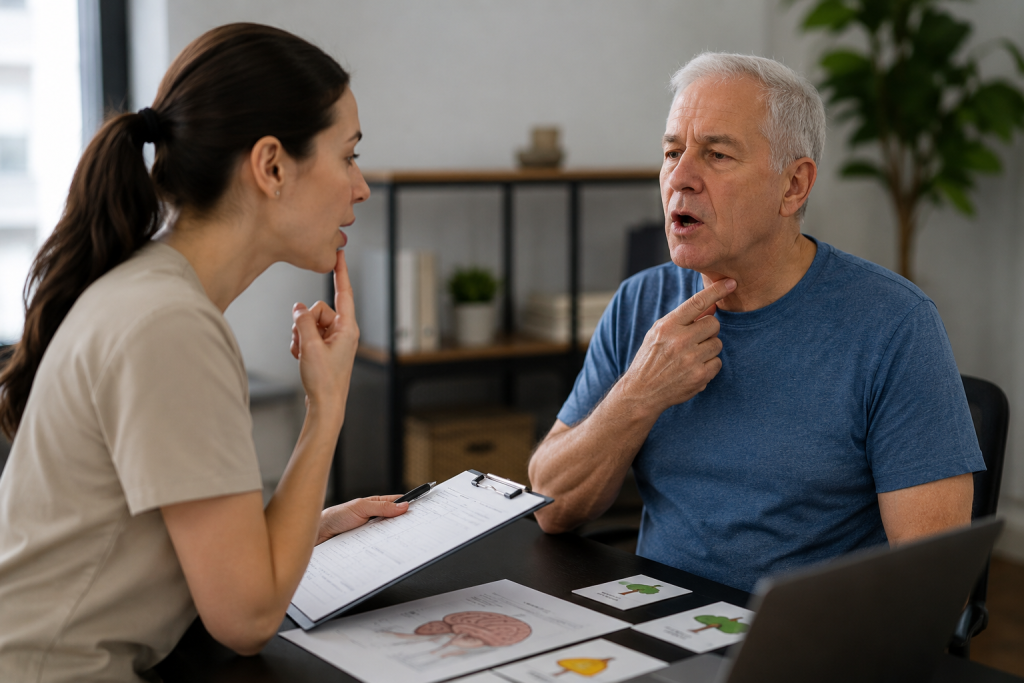
What the evaluation covers:
- How clearly words can be understood or spoken
- Affected reading and writing ability
- Memory and focus as they relate to communication
This initial assessment forms the baseline for every future session. This is often where home health care referrals for seniors begin. A senior’s overall assessment connects a stroke survivor with a speech-language pathologist without delays from an outside intake process.
Rebuilding Word-Finding and Language Skills
Aphasia makes it challenging to retrieve the right word, even when their thought process works perfectly fine. Therapy helps rebuild these connections through repetition and focused practice sessions.
How language recovery typically works:
- Practicing word-finding and naming exercises
- Practicing with sentence structure and grammar
- Activities involving reading and writing customized to one’s ability
Progress is often rewarded. However, such increments add up significantly over time. Consistently scheduling home health care services can support progress, as regular practice matters as much as the exercises themselves.
Improving Speech Clarity and Muscle Control
Stroke often causes muscle weakness that results in slurred speech. Words often come out slurred or difficult to understand. Targeted speech therapy can help improve speech production, coordination, and clarity.
What clarity-focused therapy includes:
- Exercises targeting lips, tongue, and jaw
- Breathing techniques supporting clearer speech
- Practice that slows down speech for enhanced articulation
Clear speech helps restore self-confidence, which matters most beyond the communication itself. This is often complemented by the benefits of physical therapy for seniors, which supports progress. Strengthening overall muscle coordination supports the same level of control required for better speech quality.
Strengthening Swallowing Safety
The same muscles that support speech are also used for swallowing. Therefore, stroke recovery can address both conditions at the same time. Unsafe swallowing leads to serious health risks if left unaddressed.
Why swallowing therapy matters:
- Helps to reduce the risk of aspiration or choking
- Evaluating food and liquid textures and recommending appropriate swallowing strategies
- Building the muscles that help with swallowing
Swallowing safely is the top priority after a stroke. Families also schedule in-home health aide services to support this priority daily. Depending on the care plan, caregivers may help with meals and follow the swallowing and dietary recommendations provided by the healthcare team.
Supporting Communication in Daily Life
Therapy never stops at exercises during a speech therapy session. It extends into real conversations at home. Home practice can also build new skills that support long-term success.
How daily life supports progress:
- Practicing conversations with every family member
- Using communication tools or devices when needed
- Building active participation across daily activities or routines
Consistent practice between therapy sessions can reinforce skills and support progress toward communication goals.
What Makes Working Nurses Homecare a Trusted Partner in Stroke Recovery
Recovering communication after a stroke takes more than exercise; it takes steady, coordinated support built around each person’s needs. Working Nurses Homecare provides exactly that kind of dedicated care, pairing seniors with experienced clinicians who understand the pace and patience stroke recovery requires. Families often seek home health care in Palm Beach County, Martin County, and Broward County as the most trusted starting point for a loved one’s recovery.
Here’s what that support typically looks like for families navigating stroke recovery:
- Clinicians experienced specifically in post-stroke communication needs
- Coordinated care between speech therapy and other recovery services
- Flexible scheduling built around a senior’s energy and pace
- Ongoing updates that keep families informed every step of the way
Don’t let uncertainty slow recovery. Contact us today to see how we can support your loved one’s journey back to confident communication.
Recovery Happens One Conversation at a Time
Every recovery journey after a stroke moves at its own pace, and progress doesn’t always follow a straight line. What looks like a small improvement one week can open the door to a much bigger one the next. Patience matters just as much as effort, both for the person recovering and everyone supporting them along the way. Staying encouraged through the slower stretches is often what makes the difference in the long run.
Frequently Asked Questions
How soon after a stroke does speech therapy typically begin?
Therapy often starts within days of a stroke, sometimes even while a senior is still in the hospital, since early intervention tends to support better outcomes.
Will speech ever fully return to how it was before the stroke?
Recovery varies widely from person to person, and while some seniors regain speech almost completely, others make significant gains without fully returning to baseline.
What can family members do to help between therapy sessions?
Speaking slowly, allowing extra time to respond, and practicing simple conversations at home all help reinforce what’s being worked on in therapy.